


Tips and Guides

Home » Tips and Guides
Skip to main content

Welcome to Sucredit

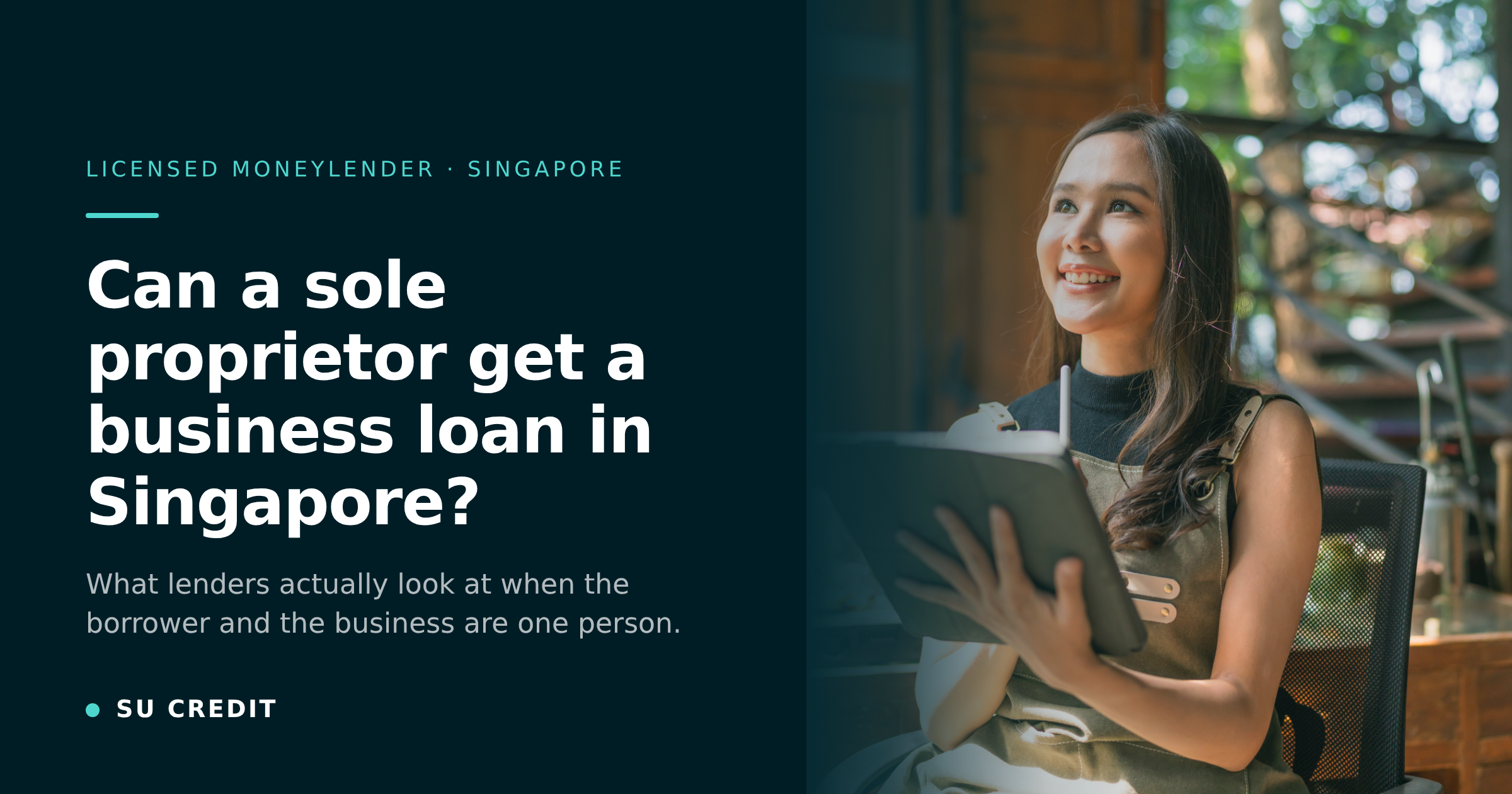
Smiling woman outdoors holding a tablet, next to a dark teal panel with the headline: ‘Can a sole proprietor get a business loan in Singapore?’
business loan

Can a Sole Proprietor Get a Business Loan in SG? | SU Credit

Yes. A sole proprietor can borrow in Singapore, including from a licensed moneylender. What changes compared with a company is who the lender is lending to. When you trade as a sole proprietorship and borrow from a licensed moneylender, you borrow as an individual, and the limits and charges set under the Moneylenders Act apply to you personally rather than to your business name. That one fact shapes how much you can borrow, what it can cost, and who is responsible for repaying it. Can a sole proprietor get a business loan in Singapore? A sole proprietor can apply to a licensed moneylender in Singapore, and licensed moneylenders lend to sole proprietors as individual borrowers. Approval is subject to the lender’s assessment of your income, existing loans and repayment ability. Your unsecured borrowing limit is calculated from your personal annual income, and as of August 2026 that limit is capped under the Moneylenders Act. Licensed moneylenders in Singapore are licensed and regulated by the Registry of Moneylenders, Ministry of Law. A licensed moneylender is not a bank, and the caps, charge ceilings and borrower protections described on this page come from the Moneylenders Act and its Rules rather than from any individual lender’s policy. Who is the borrower when you run a sole proprietorship? Under the Moneylenders Act, a licensed moneylender lends to an individual borrower. If you trade as a sole proprietorship, that individual is you. The caps below therefore apply to you as a person, and across every licensed moneylender you have borrowed from, whatever trade name the money is used for. What do lenders actually look at when a sole proprietor applies? A licensed moneylender in Singapore assesses three things: your income, your existing loans, and your ability to repay. Approval is subject to that assessment. No licensed moneylender can lend you more than the statutory cap for your income tier, however strong the rest of your application looks. Income, as assessed Your income determines your unsecured cap. For a sole proprietor the figure that matters is your assessed personal income, not the total passing through your business account: the cap is set against income, not turnover. What you already owe Licensed moneylenders check applications against the Moneylenders Credit Bureau (MLCB). The unsecured cap is an aggregate figure across all licensed moneylenders combined, so loans you already hold elsewhere reduce what remains available to you. Your ability to repay The third element is whether the repayments fit what you earn. How any lender weighs this is a matter for its own assessment, and no outcome can be promised in advance. Is it harder to get a loan as a sole proprietor than as a Pte Ltd? The structure you trade under does not change the statutory position when you borrow from a licensed moneylender in Singapore: you borrow as an individual, and the caps and charge ceilings under the Moneylenders Act apply to you personally. The practical consequence for a sole proprietor is that the debt is yours, not your trade name’s. If the business slows, the repayment obligation stays with you. Should a sole proprietor take a business loan or a personal loan? For a sole proprietor borrowing from a licensed moneylender, the distinction is thinner than it sounds. A licensed moneylender lends to you as an individual, so the same caps under the Moneylenders Act apply whether you describe the purpose as business or personal. Using the money for your business does not raise your cap, and it does not change the charge ceilings set out below. Is a “business loan” from a licensed moneylender the same as a personal loan? In substance, for a sole proprietor, yes: the borrower is the individual either way. If a lender describes a product to you as a business loan, ask which caps and charges apply, then check them against the figures below. How much can a sole proprietor borrow in Singapore? As of August 2026, if you are a Singapore Citizen or Permanent Resident earning less than S$20,000 a year, licensed moneylenders can lend you at most S$3,000 in unsecured loans in total, across all licensed moneylenders combined. If you earn S$20,000 or more, the cap is six times your monthly income. Foreigners residing in Singapore face lower tiers. Secured loans have no cap. Borrower Annual income Maximum unsecured borrowing Singapore Citizen or PR Below S$20,000 S$3,000 Singapore Citizen or PR S$20,000 or more 6 times monthly income Foreigner residing in Singapore Below S$10,000 S$500 Foreigner residing in Singapore S$10,000 to below S$20,000 S$3,000 Foreigner residing in Singapore S$20,000 or more 6 times monthly income Any borrower, secured loans Any No cap Unsecured borrowing caps under the Moneylenders Act, aggregate across all licensed moneylenders. Figures as of August 2026, from the Registry of Moneylenders, Ministry of Law. If I already have loans with other licensed moneylenders, how much more can I borrow? The cap is a total, not a per-lender allowance. As of August 2026, the unsecured limit for your income tier applies across all licensed moneylenders combined, and applications are checked against the Moneylenders Credit Bureau (MLCB). If you are already at your cap, a further unsecured loan from another licensed moneylender is not available to you. What is the maximum a licensed moneylender can charge me on top of what I borrow? As of August 2026, a licensed moneylender in Singapore may charge at most 4% interest per month, computed on the principal remaining after repayments. Late interest is capped at 4% per month and applies only to the amount repaid late. The late fee is capped at S$60 for each month of late repayment, and the administrative fee at 10% of the principal, charged when the loan is granted. Interest, late interest, the administrative fee and late fees added together can never exceed the principal you borrowed. Court-ordered legal costs are the only other charge a licensed moneylender may impose. The 4% monthly ceiling has been in effect since 1 October 2015 and

Coins and paper money arranged on a globe with a white statistical form in the background, illustrating the concept of loan for foreigners
best money lender

A Comprehensive Guide to Personal Loan for Foreigners in SG

Are you searching for a personal loan for foreigners in Singapore? If you’re living or studying in Singapore and you’re not from here, finding the right loan can seem challenging. With so many people from other countries making up over 38% of the population, there’s a big need for loans that fit foreigners. This in-depth guide is here to help you. We will talk about how you can get a personal loan, what you need to apply, the different kinds of loans you can get, and how to pay back the loan. Getting a personal loan can make a big difference in managing your money, especially if you’re from another country living in Singapore. Whether you’re working or studying, this guide provides the crucial insights to make informed decisions. Let’s dive deep into the essentials of acquiring a personal loan for foreigners in Singapore, setting you on the path to financial flexibility and success. What is a Foreigner Loan in Singapore? Many foreign workers in Singapore, who contribute significantly to the economy, find themselves in a challenging situation when it comes to bank loans. While they earn their living in this vibrant city, they often can’t get loans from banks as easily as locals can. This makes managing their finances tough, especially without access to the same financial support Singaporeans have. Thankfully, the introduction of foreigner loans in Singapore has been a game-changer. Unlike typical banking products, these loans are crafted with the unique circumstances of foreigners in mind, sidestepping the need for a credit history or collateral. As a result, personal loans for foreigners present a seamless solution for expatriates and foreign workers eager to address their financial requirements without the usual red tape. Entities like SU Credit have emerged as vital players in this space, offering specialized foreigner loan services that allow for quick and straightforward financing. This evolution in lending practices signifies a welcome change, granting foreign workers the means to navigate their financial situations with greater ease. This ensures their ability to thrive in Singapore is not hindered by financial constraints. Eligibility Criteria For Loan For Foreigners If you’re a foreigner in Singapore looking for a personal loan, there are some key eligibility criteria you need to meet. Lenders in Singapore generally require: Age between 21 and 55 years old. A valid employment pass with at least 1 year remaining. A minimum annual income of S$40,000 to S$60,000. Either a good credit history or a Singaporean guarantor. It’s important to remember that different lenders might have their own specific requirements, so it’s a smart move to get in touch directly with them. SU Credit, renowned for its assistance to foreigners, can offer personalized guidance based on their criteria, making the process of applying for a personal loan for foreigners smoother. Documents Needed for Foreigner Loan When applying for a personal loan, you’ll need to show certain paperwork to back up your application. Here’s what you might be asked for: Identity Verification: You’ll need to show who you are with things like your passport or work-related passes. Income Evidence: To show how much you earn, you could be asked for your job contract, recent payslips, or statements from your bank. Address Proof: You’ll need something that shows where you live in Singapore, like a bill for your utilities or your lease agreement. Additional Papers: Depending on what the loan provider asks for, you might also need to provide more info like what qualifications you have or details about your job history. Top of Form What are the Types of Personal loan for foreigners in Singapore? When foreigners living in Singapore need a personal loan, searching the options available can be overwhelming. To simplify the process, let’s break down the types of personal loans into easy-to-understand categories. Secured vs. Unsecured Loans Secured Personal Loans involve the borrower offering an asset as collateral, like a house or savings account. This security often results in lower interest rates and the ability to borrow more money. Unsecured Personal Loans, conversely, do not require collateral and rely on the borrower’s credit score for approval. These loans are more flexible in terms of asset security but come with higher interest rates due to the increased risk to the lender. Short-term vs. Long-term Loans Short-term Loans are designed for quick repayment, typically within one to three years, making them ideal for immediate financial needs. Long-term Loans extend over longer periods, usually five to ten years, suitable for more substantial expenses or projects requiring extended repayment timeframes. Bank Loans vs. Licensed Moneylenders Bank Loans offer competitive interest rates and flexible terms, generally available to those with stable incomes and solid credit histories. For foreigners, these might be a bit more challenging to secure due to stringent eligibility criteria. Licensed Moneylenders, like SU Credit, provide a viable alternative with more lenient requirements. While the interest rates might be higher, SU Credit ensures that personal loans for foreigners are accessible, accommodating a wider range of financial situations and needs. Deciding on the right personal loan involves considering your financial goals, repayment abilities, and individual circumstances. For those leaning towards licensed moneylenders for their flexibility and understanding of foreigners’ unique challenges, SU Credit stands out as a reputable option. Our expertise and tailored loan solutions make us a go-to for foreigners seeking financial assistance in Singapore. Interest Rates and Fees For foreigners looking for a personal loan in Singapore, it’s key to get a clear picture of the interest rates and any additional fees. Understanding these will help you figure out the total cost of the loan and ensure you’re picking a deal that’s good value for money. Interest rates on personal loans can change depending on things like how reliable you seem to the lender, how much you’re borrowing, and for how long. Generally, if you’ve got a solid credit score and your finances are in good shape, you could be looking at lower interest rates. It’s really important to shop around and compare what different

Illustration depicting income inequality, highlighting the choice between a personal loan in Singapore and a payday loan.
Personal Loan

How Payday Loan Differs From Personal Loan in Singapore?

Are you in a financial pinch and trying to decide between a payday loan and a personal loan in Singapore? It can be tough to know which one is the right fit for your situation. Both options offer quick cash, but they come with their own set of rules and repayment terms. At SU Credit, we understand the dilemma and aim to simplify your decision-making process. In this article, we’ll break down the differences between payday loans and personal loans, making it easier for you to choose the one that best matches your needs. What is a Payday Loan in Singapore? How Does it Work? A payday loan is a type of short-term borrowing, often referred to as a cash advance. This loan amount varies, largely depending on the borrower’s monthly income. The interest rate for a payday loan can start from as low as 1%, influenced by various factors such as the repayment period and the borrower’s credit rating. These loans are typically used for immediate financial needs like paying off monthly utilities, settling credit card dues, covering personal financial emergencies, or managing sudden, unforeseen costs. One of the main advantages of payday loans is their quick processing time, which makes them ideal for urgent financial situations. Applicants don’t need to provide extensive documentation, such as bank statements or credit reports, to secure a loan. As mentioned earlier, payday loans are unsecured, meaning borrowers don’t need to provide any collateral. This lack of security for the lender often results in higher interest rates for the borrower. When considering this option, it’s important to look for a licensed moneylender to ensure fair practices and terms. What is a Personal Loan in Singapore? How Does it Work? When considering a personal loan in Singapore, it’s essential to understand how they work. Offered by banks, credit unions, and licensed moneylenders, personal loans provide a flexible financing option without requiring any collateral. This flexibility comes with higher interest rates, reflecting the perceived risk by lenders of offering unsecured loans. The amount you’re eligible to borrow through a personal loan depends on factors such as your income, whether you’re employed or self-employed, your existing debts, and how these debts stack up against your income. For the self-employed, lenders will consider the financial health of your business, including assets, liabilities, and any business-related loans. Interest rates for personal loans can vary from one lender to another but are generally capped at 4% per month in Singapore. These loans offer a repayment period that can range from one year to five years, providing borrowers with considerable flexibility in managing their repayment schedule. Thanks to their higher borrowing limits, personal loans are a popular choice for financing major expenses, such as home renovations, weddings, vacations, or even consolidating debt. The key to successfully utilizing a personal loan in Singapore is to choose a licensed moneylender or a reputable financial institution that offers fair terms and rates, ensuring that your loan supports your financial goals without undue burden. Key Differences Between Payday Loan and Personal Loan When looking into borrowing money in Singapore, you might find yourself choosing between a payday loan and a personal loan. Both have their own benefits and can be helpful depending on your situation. Here, we’ll compare payday loans and personal loans from licensed moneylenders, focusing on their interest rates, how much you can borrow, and how long you have to pay them back. This comparison will help you figure out which loan is better for you. Income Eligibility Requirements When it comes to income requirements for borrowing money in Singapore, payday loans and personal loans from licensed moneylenders operate differently. For payday loans, the focus is primarily on your monthly income. This means the amount you can borrow is directly tied to what you earn each month. It’s designed like this because payday loans are meant to cover immediate, short-term needs until your next paycheck. On the other hand, personal loans consider your annual income, which can involve evaluating your bank statements and possibly other assets you might have. This broader assessment allows you to qualify for a larger loan amount compared to what you’d get with a payday loan. Therefore, if your financial need is significant, opting for a personal loan from a licensed moneylender, like SU Credit, might be more suitable. Ease of Approval Getting a payday loan is often faster and easier. Moneylenders like SU Credit are usually more flexible with payday loans, which helps many different people get them. All you need to show is that you can pay back the money with your next paycheck. On the other hand, if you’re going for a personal loan, you might need to give more paperwork and go through more checks. This could make it take a bit longer to get approved. SU Credit, as a trusted lender, ensures this process is as smooth as possible, but it’s still more detailed compared to payday loans. Interest Charges Even though neither payday loans nor personal loans in Singapore require you to put up collateral, personal loans often have lower interest rates. This means if you’re borrowing money for something urgent or want to combine several debts into one, a personal loan could end up costing you less over time. It’s worth noting that the interest you’ll pay is capped at 4% per month by law, the same limit applies to any late payment fees. Repayment Period The time you have to pay back your loan also varies greatly. A payday loan in Singapore is designed to be a quick fix, typically needing to be paid back in a month or less. Personal loans give you more breathing room, with repayment periods that can stretch up to five years. This longer duration can make monthly payments more manageable. Joint Application Another difference is in how you can apply for these loans. Some places that offer personal loans allow you to apply with someone else, like a family member. This can be

Close-up view of the words "DEBTS HELP ME" arranged on a scramble board with glowing lights in the background, symbolizing the urgent need for a debt consolidation plan in Singapore.
debt consolidation

Debt Consolidation Plan in Singapore: A Comprehensive Guide

Are you feeling overwhelmed by credit card debt in Singapore? The debt consolidation plan in Singapore might be the relief you need. With enticing credit card rewards like air miles, cash back, and even free luggage, it’s easy to find yourself swiping away without considering the consequences. However, this convenience often leads to a daunting pile of debt. If you’re struggling to keep up with credit card and personal loan payments, a Debt Consolidation Plan could be your pathway out of financial stress. This guide will explore how such a plan works and how it can help you regain control of your finances. What Is a Debt Consolidation Plan in Singapore? A Debt Consolidation Plan in Singapore allows individuals to consolidate all their outstanding unsecured loans into a single loan from a financial institution, such as a licensed money lender or bank. This approach simplifies debt management by reducing multiple payments to just one monthly repayment, making it easier to manage finances. Key Features Interest Rates: While the interest rates for DCPs may seem high compared to other loan types, they are significantly lower than the average credit card rates in Singapore. The credit card rates can be as high as 25% per annum. DCPs generally offer rates between 3.12% and 12%. This makes DCPs an advantageous option for those struggling with high-interest credit card debt and other unsecured loans. Loan Amount: The Debt Consolidation Plan allows you to borrow an amount ranging from 12 to 18 times your monthly salary. This flexibility ensures that you can consolidate a significant amount of debt under one loan. This is especially helpful if you have multiple high-interest loans or credit card debts. Repayment Tenure: The plan offers flexible repayment options, with terms ranging from 1 to 10 years. This range allows you to choose a repayment period that best suits your financial situation and goals. Thus, it makes easier to manage monthly payments without overstressing your budget. By consolidating debts, individuals can avoid the compound interest that quickly accumulates on credit cards, often referred to as the “snowball effect.” This helps in managing debt more effectively and can prevent the debt from growing uncontrollably. As a licensed money lender in Singapore, SU Credit provides options for those considering a debt consolidation plan. We offer guidance and services to help individuals consolidate their debts, thereby gaining better control over their financial situation. How the Debt Consolidation Plan in Singapore Works? Imagine you’re earning a monthly salary of S$3,000 but have accumulated debts totaling S$80,000 due to multiple credit card and personal loan expenses on luxury items. This amount is well over 12 times your monthly income, indicating a significant financial strain. In this situation, a debt consolidation plan in Singapore could be a strategic move. By consolidating all your high-interest debts into one loan with a lower interest rate from a financial institution, you reduce your monthly burden. Instead of multiple payments, you make a single repayment to the institution that now holds your consolidated loan. This plan simplifies your finances and potentially lowers the amount you pay monthly. For those not eligible or looking for different options, alternative personal loans like balance transfers or personal installment loans might be suitable. Loan Exclusions in Debt Consolidation Plans in Singapore In Singapore, Debt Consolidation Plans (DCPs) are specifically helpful for managing unsecured loans like personal installment loans, credit card debts, and personal lines of credit. These types of debts do not require collateral to be provided by the borrower. However, secured loans, which are backed by assets like property for property loans, vehicles for car loans, or funds for education loans, cannot be included in a DCP. Business loans also do not qualify for consolidation under a DCP. This exclusion of secured and business loans helps to focus the DCP on high-interest, unsecured debts, making it a targeted solution for personal financial restructuring. Eligibility for Debt Consolidation Plan in Singapore The Debt Consolidation Plan (DCP) is for Singaporeans and permanent residents. This ensures that the program supports local citizens and residents in managing their debts. Income and Asset Criteria Applicants must have an annual income ranging from S$20,000 to S$120,000. Moreover, their net assets should not exceed S$2 million. These criteria help to target the DCP towards individuals who are neither too wealthy nor below a certain income threshold. Debt Requirements To qualify for a DCP, you must be facing significant debt levels—specifically, your total debts must be at least 12 times your monthly income. This condition confirms that the DCP caters those who have heavy debts to pay and are truly in need of assistance in debt management. SU Credit can assist eligible individuals by offering DCPs as part of their financial solutions, providing a structured approach to managing and reducing their debt burdens efficiently. For more detailed guidance and to see if you qualify for a DCP, consulting with licensed money lenders like SU Credit can be very helpful. Documents Required For the Application To apply for a Debt Consolidation Plan, you will need to prepare the following documents: Credit Bureau Report NRIC (front and back) Latest income statements Recent statements for credit cards and other unsecured credits, such as personal loans If applicable, confirmation letters detailing unbilled principal balances for unsecured installment plans These documents help verify your identity, financial status, and the extent of your debts, ensuring a smooth application process. What to Consider Before Applying for a Debt Consolidation Plan in Singapore? Understanding Additional Charges When you get a Debt Consolidation Plan (DCP) in Singapore, your loan amount will include not just your current debts and outstanding interest, but also an extra 5% above this total. This additional percentage covers potential fees like late payment charges that might occur during the repayment period. Rest assured, any excess from this buffer will be returned to you at the end of the loan term. Refinancing Options If you decide that you want to switch your DCP to another financial institution,

Tips to Reapply After Loan Rejection
licensed money lender

Can You Reapply After a Loan Rejection? Here’s How

Getting rejected for a loan can feel like a punch to the gut. Your dreams of buying that home, expanding your business, or consolidating debt suddenly seem out of reach. But here’s the good news: a loan rejection isn’t the end of your financial journey—it’s just a detour. You absolutely can reapply for a loan after being rejected. The key lies in understanding why you were turned down and taking strategic steps to strengthen your application. This guide will walk you through the common reasons for loan rejection, provide actionable steps to improve your chances, and outline proven strategies for a successful reapplication. Common Reasons for Loan Rejection Understanding why lenders say “no” is your first step toward getting a “yes.” Here are the most frequent culprits behind loan rejections: Poor Credit Score Your credit score is like your financial report card. Most lenders have minimum score requirements, and failing to meet them can result in automatic rejection. For conventional home loans, you typically need a score of 620 or higher. Business loans often require a credit score of 650 or above. A low credit score signals to lenders that you may struggle to repay the loan. Late payments, defaults, or high credit utilization can all negatively impact your score and reduce your chances. High Debt-to-Income Ratio Lenders want to see that you can comfortably afford loan payments alongside your existing obligations. Your debt-to-income ratio (DTI) compares your monthly debt payments to your gross monthly income. For home loans, most lenders prefer a DTI below 43%. Business loan requirements vary, but lenders generally want to see that your business generates enough cash flow to cover the new debt while maintaining operations. Insufficient Income Stable, verifiable income is crucial for loan approval. Lenders need confidence that you can make consistent payments over the life of the loan. This is particularly challenging for self-employed individuals or those with irregular income streams. Recent job changes, gaps in employment, or declining income trends can all trigger rejection. Lenders typically require at least two years of steady income history. Lack of Collateral Secured loans require valuable assets to back the loan. If you don’t have sufficient collateral or if the collateral’s value doesn’t meet the lender’s requirements, you may face rejection. For business loans, inadequate business assets or personal guarantees can be deal-breakers. Home loans typically require the property itself as collateral; however, if the appraisal comes in low, it can derail your application. Errors in Application Sometimes rejection comes down to simple mistakes. Incomplete applications, missing documentation, or inconsistent information can raise red flags with lenders. Mathematical errors, typos, or failing to disclose certain debts or income sources can make you appear unreliable or dishonest, two qualities lenders avoid. Steps to Take Before Reapplying Don’t rush into reapplying immediately after rejection. Take time to address the underlying issues that led to the initial denial. Here’s your roadmap to improvement: Obtain and Review Your Credit Report Start by getting a free copy of your credit report from all three major credit bureaus: Experian, Equifax, and TransUnion. You’re entitled to one free report annually from each bureau through AnnualCreditReport.com.  Review each report carefully, noting your credit score, payment history, credit utilization, and length of credit history. Look for patterns that explain your rejection, such as recent late payments or high balances. Correct Any Errors on Your Credit Report Credit report errors are more common than you might think. Incorrect personal information, accounts that don’t belong to you, or inaccurate payment histories can unfairly damage your credit score. If you find errors, dispute them immediately with the credit bureau. Provide documentation supporting your claim, such as bank statements or payment records. The bureau must investigate within 30 days and remove any verified errors. Reduce Your Debt-to-Income Ratio Lowering your DTI requires either reducing debt or increasing income, preferably both. Begin by paying down high-interest debt, particularly credit card debt. Consider consolidating multiple debts into a single, lower-rate payment. For business loans, focus on improving cash flow by collecting outstanding receivables, reducing unnecessary expenses, or increasing revenue through marketing efforts. Increase Your Income Boosting your income can significantly strengthen your loan application. Consider taking on additional work, requesting a raise, or exploring new revenue streams for your business. Document any income increases with pay stubs, tax returns, or financial statements. Lenders want to see consistent, verifiable income growth over several months. Gather Additional Documentation Strengthen your application with comprehensive documentation. This might include: Recent pay stubs and tax returns Bank statements showing consistent deposits Proof of additional income sources Business financial statements and tax returns Documentation of improved credit management Having thorough documentation ready demonstrates your seriousness and helps lenders make informed decisions. How to Reapply Successfully Armed with improvements to your financial profile, you’re ready to reapply. But don’t just submit the same application to the same lender. Use these strategies to maximize your chances: Choose the Right Lender Different lenders have different requirements and specialties. If a traditional bank rejected your application, consider credit unions, online lenders, or specialized lenders who work with borrowers in your situation. Credit unions often have more flexible requirements and may work with members who have less-than-perfect credit. Online lenders may offer faster approval processes and consider alternative data beyond traditional credit scores. Research lenders thoroughly, comparing interest rates, fees, and approval requirements. Some lenders specialize in working with borrowers who have been previously rejected. Consider a Co-signer or a Secured Loan A co-signer with strong credit can significantly boost your application. The co-signer agrees to take responsibility for the loan if you default, which reduces the lender’s risk. Alternatively, consider a secured loan where you put up collateral. This reduces the lender’s risk and may help you qualify for more favorable terms than those of an unsecured loan. Write a Cover Letter Include a brief cover letter explaining your previous rejection and the steps you’ve taken to improve your financial situation. Be honest about past challenges while emphasizing your

Su Credit, 175 Bencoolen Street #01-36 Burlington Square, Singapore, 189649 Tel: +65 6636 5644